Water Bottle Machine Embroidery Design Review
First Impressions: Modern, Minimal, and Market-Ready
As an embroidery designer prepping for a weekend craft fair, the Water Bottle Machine Embroidery Design immediately caught my eye. With its clean lines and modern aesthetic, it fits perfectly into the current trend of minimalist, functional embroidery that appeals to a wide range of buyers—from eco-conscious shoppers to trend-savvy decorators. It’s not overly bold, nor is it too cute. Instead, it strikes a balance between decorative and practical, which is exactly what you want when creating handmade items for market.
Best Products to Showcase the Design
This design shines brightest on everyday-use items that can double as both practical and giftable handmade products. Here’s how it performs across key craft fair favorites:
- Tote bags: Perfect for a subtle, modern accent on reusable totes. Works well centered on the front or along a strap.
- Aprons: Adds a charming detail near the hip pocket or chest area. Looks especially sharp on minimalist linen or denim aprons.
- Tea towels: A clean, understated addition to the corner of a kitchen towel. Photographs beautifully for Etsy listings.
- Embroidered patches: Ideal for sew-on or iron-on patches that can be sold as standalone items or added to other goods.
- Caps: May require some testing due to the curved surface, but could work well on the side or back of a baseball cap.
- Fabric pouches: Makes a great focal point on small zipper pouches, especially when paired with coordinating thread colors.
- Pillow covers: Scales well for a clean, modern look on throw pillows. Especially effective on neutral tones.
How It Sells: Visibility, Clarity, and Appeal
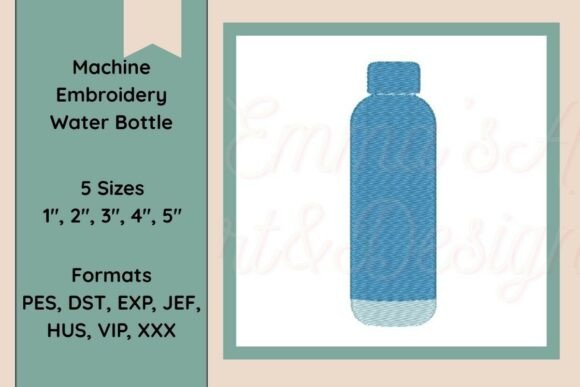
At a glance, this machine embroidery design reads clearly as a water bottle—no guessing required. That’s a big win for craft fair foot traffic. Shoppers often make split-second decisions based on what they recognize and connect with emotionally. The simplicity of this design ensures it’s not only recognizable but also versatile enough to appeal to a variety of customer tastes.
It works both as a small accent and as a larger focal point depending on your product. For example, a large tote can carry a scaled-up version, while a patch or pouch can use a smaller iteration without losing visual impact. That flexibility is crucial when you're trying to offer a cohesive but varied booth display.
Photography and Online Listings
One of the biggest pluses of this design is how well it photographs. The clean lines and minimal detail make it easy to showcase in product photos, especially on white or light backgrounds. This is especially important for Etsy sellers and digital crafters who rely on printable mockups and online listings to attract buyers. The design’s clarity translates well to digital assets, helping your product stand out in crowded marketplaces.
Batch Production & Repeatability
If you're planning to make a dozen or more of a product for your craft fair booth, you’ll appreciate how consistently this design stitches out. Assuming the stitch density isn’t too heavy (always test first), it should run smoothly across multiple hoopings without causing tension issues or fabric distortion. That’s a major plus for small shop owners looking to streamline production without sacrificing quality.
Points to Watch For
While the design appears clean and modern, there are a few careful-use notes I’d highlight before diving into full production:
- Dense stitch areas: If the design includes thick outlines or solid fills, be sure to test on your intended fabric. Dense stitching can pucker thinner materials.
- Small lettering or fine lines: If the bottle includes text or delicate elements, consider scaling up when using on textured towels or dark fabrics where detail may be lost.
- Curved surfaces: Caps or curved bottles may require extra stabilizer and careful hooping to prevent distortion.
- Dark fabric contrast: If stitching on black or navy, check that your thread color pops enough to maintain clarity.
- Small sizes: At reduced scales, some lines may blur together. Always test at your intended size before mass-producing.
Impact on Booth Display and Customer Engagement
When arranged on a well-curated table display, the Water Bottle Machine Embroidery Design adds a touch of modernity that stands out among more traditional motifs. It helps your booth feel current and cohesive, especially if you’re focusing on eco-friendly or reusable products. Customers appreciate recognizable, well-executed designs—and this one delivers both.
It also enhances perceived product value. Because it looks clean and intentional, buyers will associate your handmade items with quality and attention to detail. This is key for creative entrepreneurs trying to build brand consistency and repeat customers.
Designer Notes: Test Before You Commit
Before producing a single finished product, take these essential steps:
- Test on scrap fabric: Always run a test hoop before stitching your final product. This helps catch any density or tension issues early.
- Check thread contrast: Make sure your thread colors complement the fabric and make the design pop.
- Review spacing and outlines: Ensure lines are clean and not overlapping or too far apart.
- Confirm hoop size: Match your embroidery file to your machine’s hoop size to avoid cropping or distortion.
- Inspect stitch density: Too tight or too loose can affect how the design looks and feels.
- Use the right stabilizer: Especially important on stretchy or textured fabrics.
- Create a real mockup: Don’t rely solely on digital mockups. Stitch a sample on your intended fabric to see how it looks in person.
- Compare fabric colors: Test on light and dark tones to ensure visibility and appeal.
- Confirm commercial licensing: Before selling any finished product, make sure your digital embroidery file allows for commercial use.
Final Thoughts: A Solid Addition to Your Summer Craft Fair Lineup
If you're an embroidery business owner or handmade shop seller preparing for a summer craft fair, the Water Bottle Machine Embroidery Design is a smart, stylish choice. It’s versatile, recognizable, and photographable—three must-haves for modern handmade sellers. Just be sure to test thoroughly, consider fabric and thread choices carefully, and always create at least one real-life sample before production.
With the right presentation and thoughtful product pairings, this design can become a standout in your booth and a repeat seller across tote bags, patches, kitchen linens, and more.